Alpais Software provides a web-based user interface for remote battery monitoring. Users can access the system through a local network, over the internet, or through cloud-based deployment scenarios, depending on project requirements.
The interface is designed to make battery status easier to understand for both technical teams and general operators. This helps users quickly identify alarms, review battery conditions, and take action when needed.
Interactive Graphical Tools for Battery Status Analysis
Alpais Software includes interactive graphical tools that help users understand battery condition more clearly. Measurement values can be viewed through visual panels and graphical summaries for faster interpretation.
Historical battery data can also be reviewed through trend graphs, helping users evaluate battery behaviour over time and better estimate service life.
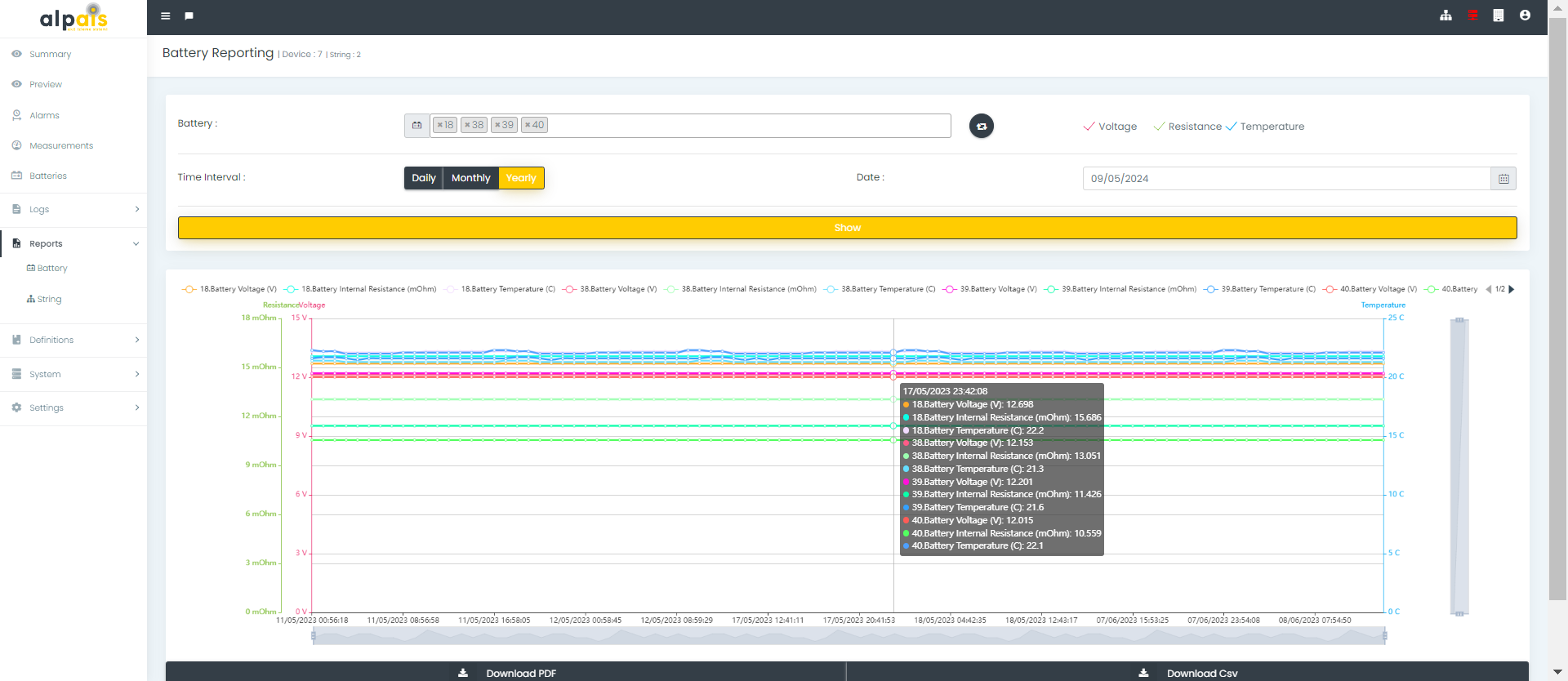
One User Interface for Multiple Locations and Control Modules
Alpais Software allows multiple locations and multiple Control Modules to be monitored from a single user interface. This makes system supervision easier for operators managing distributed battery assets.
With one centralized interface, Alpais helps simplify monitoring while improving visibility across the entire battery infrastructure.

Email Notifications for Multiple Users
Alpais Software analyzes collected data, presents system status, and sends notifications when defined alarm conditions are reached. Multiple users can be registered for email notifications, helping distribute responsibility across maintenance and operations teams.
For broader system capabilities, see the Alpais BMS architecture.

Unlimited Users with Different Authorization Levels
Alpais Software supports unlimited users with different authorization levels. This allows system owners to define who can receive notifications, who can review data, and who can edit settings, giving better control over system access and responsibilities.
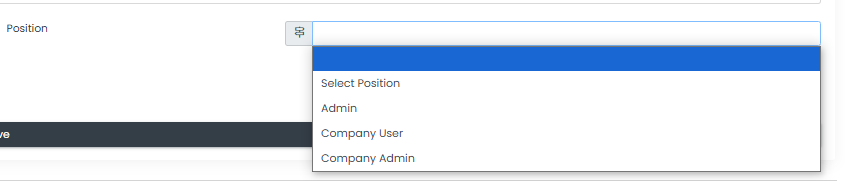
Multi-language Support for User Interface
Alpais Software is designed for international use. In addition to English and Turkish, the platform supports additional language options for global projects and multinational teams.
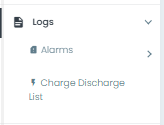
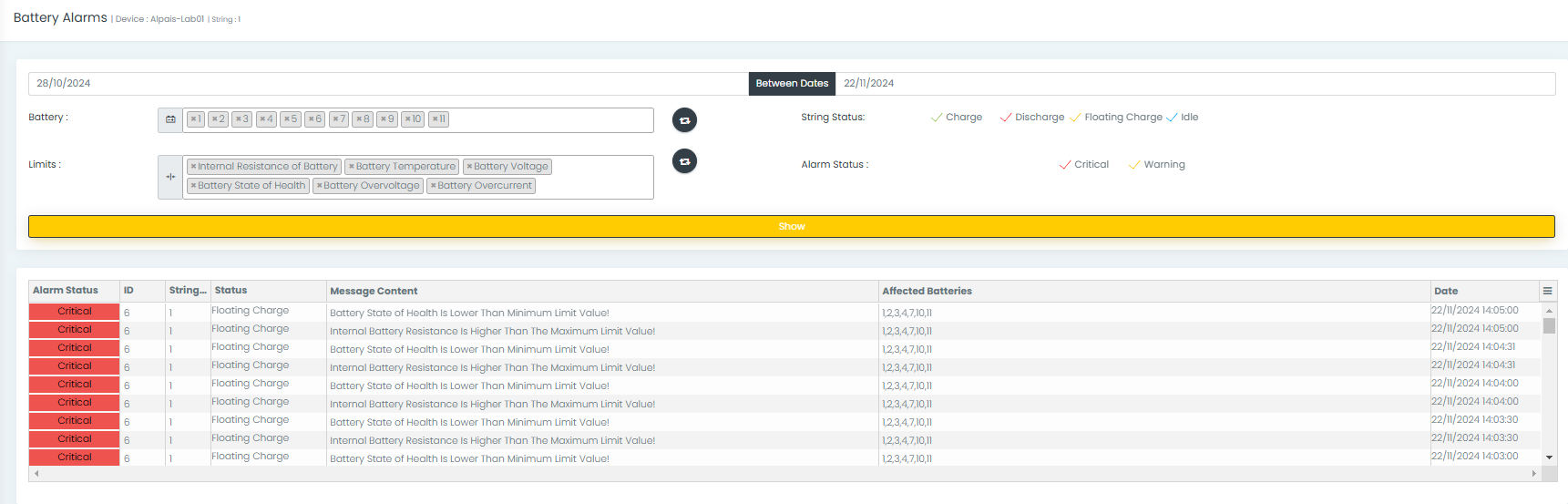
Logs and Charge/Discharge Records
Alpais automatically records alarm logs and allows these records to be exported from the user interface in PDF and CSV formats. The system also records charge and discharge events, including their date, duration, and frequency, helping users understand battery usage conditions more clearly.
Historical Battery and String Reports in a Desired Period
Alpais collects battery and string data at regular intervals, enabling long-term trend analysis. Users can review battery and string reports for selected periods such as daily, monthly, and yearly, and export them in PDF or CSV format.
Optionally Battery Voltage Balancing Process
Alpais uses a passive balancing method for battery voltage equalization. The hardware infrastructure is already included in every Battery Module, and the feature can be activated later through a manufacturer software update. This makes battery voltage balancing available as an upgrade option after the initial purchase.
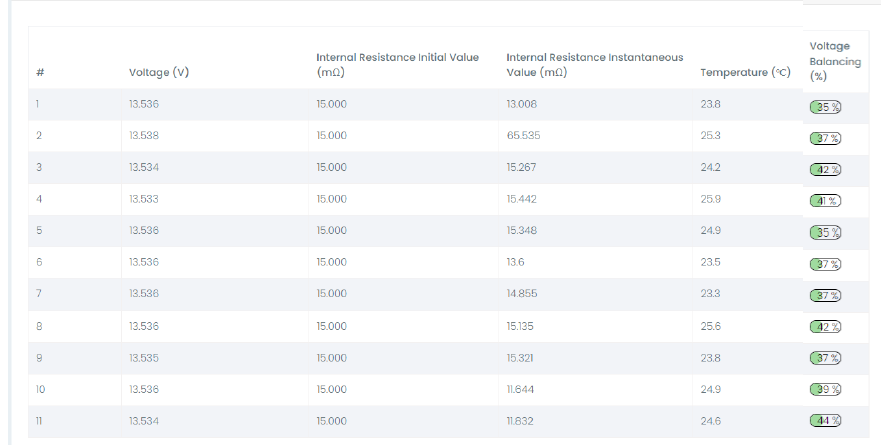
Separated User Interface and Services & Installation Interface
This separation is particularly useful for solution providers serving end users. Battery owners can work only with the user interface, while installation and service teams can access separate tools when needed.
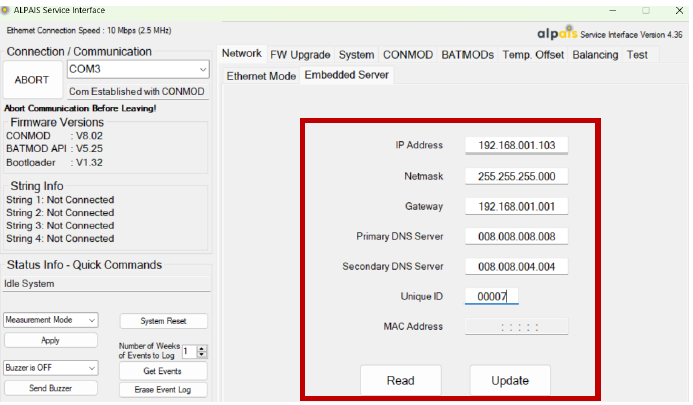
Communicates with other monitoring systems like SCADA, DCIM, etc.
Many users in data center and automation environments want to integrate battery monitoring into existing SCADA, DCIM, or third-party monitoring platforms. To support this, Alpais communicates with external systems through protocols such as SNMP and Modbus. For hardware details, see the system architecture.
Two-Level Battery Alarm Management
Alpais supports two alarm levels for battery and string parameters: Warning and Critical. For example, if internal resistance rises above the first threshold, the system creates a warning alarm. If it exceeds the critical threshold, the system generates a critical alarm and sends notifications to registered users.

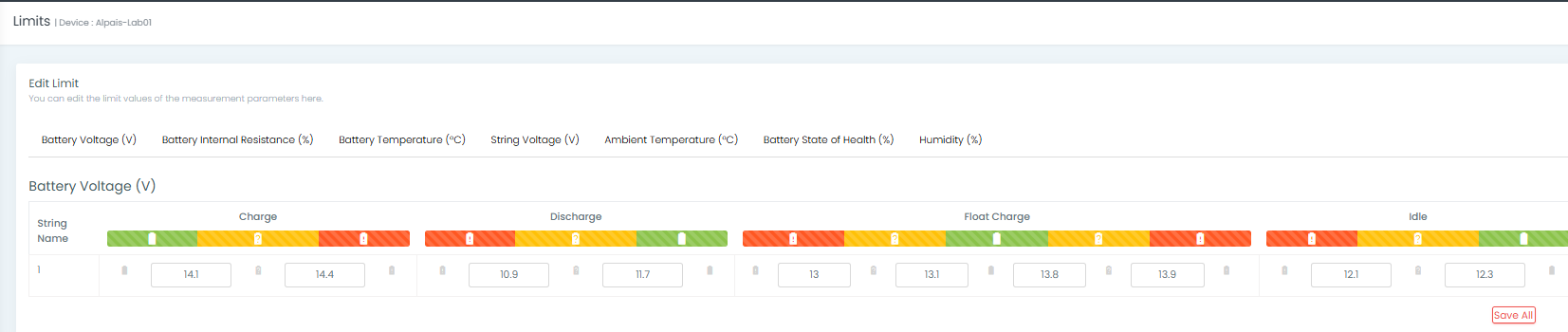
Editing Thresholds and Alarm Limits
The user interface includes configurable threshold and alarm settings. Users can define charging, discharging, float, and idle thresholds according to application needs, and battery or string alarm limits can be adjusted based on project requirements.
.png)
Utilizing Dry Contacts for 3rd party sensors
The Control Module includes dry contacts for third-party sensors such as hydrogen gas sensors and ground fault detectors. These inputs can also be monitored through the user interface, expanding the visibility of the overall battery environment.
Try Alpais Software Live Demo